

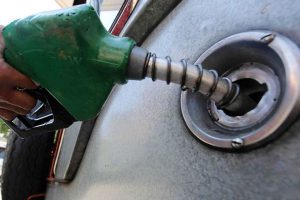

MOTORISTS will face fuel price increases of more than P5 per liter this week as higher international oil prices due to the Iran war and a weaker peso raise the cost of petroleum imports.
The Department of Energy (DoE) on Monday said gasoline prices would rise by P4.69 per liter, diesel by P5.18 and kerosene by P5.58 starting on Tuesday.
The increases will push pump prices back to around P100 per liter, with gasoline reaching more than P102.04 per liter, diesel P102.68 and kerosene nearly P120.
“Beginning tomorrow, oil companies will implement upward adjustments in domestic petroleum prices, driven largely by higher international oil prices following renewed tensions affecting energy flows through the Middle East,” Energy Secretary Sharon S. Garin told a news briefing on Monday.
Rino E. Abad, director of the DoE Oil Industry Management Bureau, said volatility from the US-Iran war has pushed petroleum import costs higher after the absence of formal peace negotiations and the announcement of tighter US financial sanctions against Iran.
The peso’s weakness against the dollar also contributed to the increase, he said.
“There is also a weakening of the peso against US dollar by around 68 centavos,” Mr. Abad said. “So the two factors have resulted in the computed increase per liter for this week.”
The Philippines could not control geopolitical events or global oil prices but could cushion their impact by maintaining adequate fuel supplies, Ms. Garin said.
As of Sept. 4, the country had about 78.08 million liters of fuel in stock, enough for 53.28 days, the DoE said.
“We cannot control geopolitical events or international oil prices,” Ms. Garin said. “What we can do is maintain adequate domestic supply, scrutinize price movements, enforce our inventory requirements and provide assistance where the government can help ease the burden on consumers.”
The government is also pursuing plans to establish a national strategic petroleum reserve to reduce the impact of future oil supply shocks.
Mr. Abad said the DoE is exploring arrangements with Saudi Aramco, Saudi Arabia’s national oil company, and Abu Dhabi National Oil Co. (ADNOC), the state-owned oil company of the United Arab Emirates’ Abu Dhabi emirate.
Saudi Aramco is considering establishing an export hub that could form part of the reserve and store crude oil for export, he said.
“The good thing about that is we won’t have to incur any costs,” Mr. Abad said. “If that happens, the storage capacity will be established here, and we will already have a product available, potentially giving us priority access to the commercial hubs that we also plan to develop as a supplement to the government-owned facility.”
The DoE has also submitted a concept note to the Economic Research Institute for ASEAN (Association of Southeast Asian Nations) and East Asia, which was tapped by Japan’s Ministry of Economy, Trade and Industry to prepare feasibility studies, he said.
The government is also set to meet with ADNOC to discuss opportunities to develop the proposed petroleum reserve, Mr. Abad said. — S.J. Talavera