


THE Philippines and the US reaffirmed their commitment to boosting defense cooperation as they marked the 75th anniversary of their Mutual Defense Treaty (MDT), with both sides approving expanded military engagements for the coming year.
US Pacific Command Commander Adm. Samuel J. Paparo and Armed Forces of the Philippines Chief of Staff Gen. Antonio G. Nafarrete co-chaired the annual Mutual Defense Board-Security Engagement Board (MDB-SEB) meeting at Camp Aguinaldo in Quezon City on Aug. 7, the US Embassy in Manila said in a statement on Monday.
During the meeting, the two military chiefs signed an eight-star memorandum approving guidance and a list of activities for continued bilateral cooperation.
“The board approved a slate of joint engagements for the upcoming year, ranging from large-scale exercises to subject-matter-expert exchanges, continuing a partnership that has produced hundreds of bilateral activities annually in recent years,” according to the statement.
“These engagements are designed to sustain interaction between the two militaries and enhance operational readiness across a range of missions, including maritime security, humanitarian assistance and disaster response,” it added.
The agreement seeks to strengthen cooperation and interoperability between the two militaries amid heightened regional tensions, while reaffirming their commitment to the 1951 MDT.
The activities are intended to maintain regular interaction between the two armed forces and improve operational readiness.
The board meeting followed this year’s iteration of Exercise Balikatan, which the embassy described as the biggest and most expansive edition of the annual Philippine-US military exercises.
Held from April 20 to May 8, the 19-day exercise involved about 17,000 troops from the Philippines, the US and multinational partners including Australia, Japan, Canada, France and New Zealand.
The embassy said the exercise marked a strategic shift from a bilateral drill toward a multinational mission rehearsal for the defense of the Philippines.
The completion of the board was particularly significant as the Philippines and the US mark 75 years of the MDT, the embassy said.
The Mutual Defense Board was established in 1958, while the Security Engagement Board was established in 2006. Together, the two bodies provide the framework for defense and security cooperation between the Philippine and US militaries under the treaty.
The US Pacific Command said it remains committed to promoting stability in the Indo-Pacific region through security cooperation, peaceful development, responses to contingencies and deterrence of aggression.
The MDT, signed in 1951, remains the foundation of the two countries’ defense relationship, with military cooperation having expanded in recent years through exercises, exchanges and other engagements.
The latest MDB-SEB meeting comes as the Philippines and the US continue to deepen security cooperation amid heightened regional tensions and growing attention to maritime security in the Indo-Pacific region.
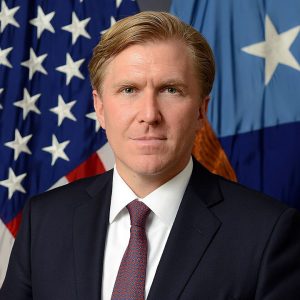
‘BALANCE OF POWER’Also on Monday, US Undersecretary of War for Policy Elbridge A. Colby said the US is seeking to deepen defense cooperation with the Philippines and other Indo-Pacific partners as part of efforts to strengthen regional deterrence.
In a fireside chat hosted by the Stratbase Institute, he described the Philippines as a model ally for increasing defense investments, modernizing its military and coast guard and contributing to regional security.
“Here in the Philippines, our alliance is undergoing a historic modernization, rooted in profound mutual respect,” Mr. Colby said.
He said Washington and Manila are co-investing in resilient infrastructure, training on advanced capabilities and operationalizing sites under the Enhanced Defense Cooperation Agreement (EDCA).
Mr. Colby said the US is looking for partners rather than protectorates, calling on allies to increase their contributions to regional security.
“This is motivated by our practical judgment that alliances are most durable when they are based on shared responsibility,” he said.
He said Washington’s approach in the Indo-Pacific region is centered on maintaining a favorable balance of power, strengthening deterrence and preserving regional stability while continuing diplomatic engagement.
“America’s interests here in the Indo-Pacific region are therefore clear, abiding and profound,” Mr. Colby said, adding that the US seeks to maintain a posture of deterrence by denial along the first island chain.
He said the US is not disengaging from Asia but is instead pursuing a more focused and resource-backed regional strategy.
“We are not leaving; in fact, we are digging in, to ensure a favorable balance of power where it matters most,” he said.
Mr. Colby also said Washington would continue to work with Southeast Asian countries based on practical interests, respect for national sovereignty and shared security concerns.
His visit to Manila was part of a regional trip that will also take him to Indonesia, Thailand and Cambodia.
Earlier Monday, President Ferdinand R. Marcos, Jr. met with Mr. Colby during a courtesy call at Malacañang.
Philippine Ambassador to the US Jose Manuel “Babe” G. Romualdez said the meeting focused on strengthening the Mutual Defense Treaty and the broader alliance.
He said the treaty is “even stronger now” given the increase in visiting forces and the transfer of additional equipment to the Armed Forces of the Philippines. — Pexcel John Bacon and Kaela Patricia B. Gabriel