

By Erika Mae P. Sinaking, Reporter
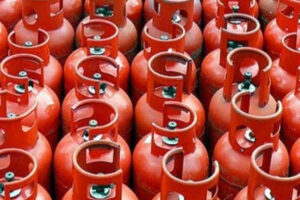
THE government’s move to suspend excise taxes on liquefied petroleum gas (LPG) and kerosene will provide limited relief to consumers and businesses amid higher global fuel prices, analysts said.
Arnel U. Ty, founder of the LPG Marketers Association, said the suspension would reduce the price of LPG by only about P3 per kilogram (kg), which he said could be offset by an expected increase in LPG prices in October.
“The suspension of excise tax for [LPG] will only reduce P3 per kg, while the incoming [LPG] price increase this coming October will [be] higher [than] the suspension of excise tax,” Mr. Ty told BusinessWorld in a Viber chat.
President Ferdinand R. Marcos, Jr. on Friday signed Executive Order (EO) No. 125, which temporarily suspends excise taxes on LPG, except when used as raw material for petrochemical production or for motive power, and on kerosene, except when used as aviation fuel.
Mr. Ty said the measure would also provide little relief to small businesses, like restaurants, because fuel costs are only one component of their operating expenses.
On supply, Mr. Ty said there was sufficient LPG available in the international market, though buying at current elevated prices remained a challenge for some. “There are enough supply in the international market, if you can afford to buy in a high price,” he said, adding that global fuel consumption “have shrink by 30%.”
Meanwhile, Jose Enrique “Sonny” A. Africa, executive director of think tank IBON Foundation, said the tax suspension would provide only negligible relief to consumers.
For the poorest half of Filipino families, Mr. Africa said only 7.1 million of 13.7 million families use LPG, based on his group’s estimates. These households typically buy just four to six 11-kilogram LPG tanks a year, he said, which means the excise tax cut under EO 125 would save them only about P13 to P18 a month even if the suspension were kept in place for a full year.
“6.8 million families or around half (49%) of the poorest will not get any benefits at all from the excise tax cuts,” he told BusinessWorld in a separate Viber message.
Mr. Africa said the number of poor households using kerosene was smaller, at 934,000 families, or less than 7% of the poorest half of families. He estimated these households would see monthly savings of only P4 to P6.
“The suspension of excise taxes on LPG and kerosene appears to be a tokenistic measure to deflect from the much more effective measure of the government using its emergency powers to rein in oil company overpricing, and from the bigger oil tax cuts in VAT (value-added tax) on diesel and gasoline demanded by transport workers and a broader public burdened by rising prices,” Mr. Africa said. He added that the new EO “will do nothing to moderate high inflation or to help poor and low-income families.”
Under EO 125, the excise taxes on covered LPG and kerosene are suspended, with the rates set to automatically revert to those under Section 148 of the National Internal Revenue Code either one week after the Dubai crude price falls below $80 per barrel, or after three months from the order’s effectivity — whichever comes first.
The Department of Energy (DoE) and the Department of Finance, through the Bureau of Internal Revenue and the Bureau of Customs, were also directed to inventory existing LPG and kerosene stocks and to submit monthly reports to the House of Representatives on the volume and value of covered products.
As with the earlier order, the excise levies on diesel and gasoline remain unchanged.
The suspension was issued under Republic Act No. 12316, which allows the President, upon recommendation of the Development Budget Coordination Committee (DBCC) and in coordination with the Energy secretary, to suspend or reduce excise taxes on petroleum products once the one-month average Dubai crude oil price reaches or exceeds $80 per barrel.
The DoE certified on Sept. 11 that the 30-day average Dubai crude price had reached $99.41 per barrel, prompting the DBCC, through Resolution No. 2026-11, to recommend the temporary full suspension.
This marks the second time this year that Mr. Marcos has invoked this authority. He first suspended excise taxes on LPG and kerosene for three months in April.