


By Pexcel John Bacon
CONGRESS’ priority bill mechanism does not guarantee swift passage of key legislation, as measures remain vulnerable to political negotiations, procedural bottlenecks and competing priorities, political analysts said.
“Having a list is good,” Hansley A. Juliano, a political science instructor at the Ateneo de Manila University, said in a Facebook Messenger chat. “But the list itself lives or dies by the actors involved.”
He said administrative delays within congressional committees could keep bills stalled for years before they even advance beyond first reading. Political bargaining and internal priorities in the House of Representatives can also slow urgent measures.
Mr. Juliano said the system depends on coordination among the President, Congress, stakeholders and civil society groups. The Executive branch identifies policy priorities, lawmakers craft legislation and outside groups help sustain public pressure for passage.
“When everything works, we can expect priority legislation to push through thanks to public pressure,” he said.
Legislation could still stall when the President’s attention shifts elsewhere, political bargaining persists in Congress or civil society groups are distracted by other concerns, he added.
Mr. Juliano also said a president’s credibility affects the ability to push a legislative agenda. He said President Ferdinand R. Marcos, Jr. has sought to project an image of a working president but did not build that reputation before taking office, potentially making calls for urgent reforms less persuasive.
Political divisions between Mr. Marcos and Vice-President Sara Duterte-Carpio could also contribute to public skepticism toward reform initiatives, he added.
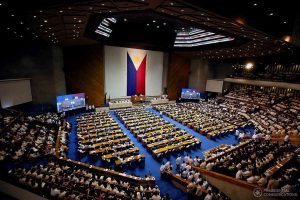
The comments come as the House of Representatives advances measures included in the Legislative-Executive Development Advisory Council (LEDAC) priority list for the 20th Congress.
Among the measures already enacted are House Bill (HB) No. 8220, which reset the first regular elections in the Bangsamoro Autonomous Region in Muslim Mindanao, and HB No. 8418, which authorized the President to suspend or reduce excise taxes on petroleum products. These became Republic Acts No. 12317 and No. 12316, respectively.
HB No. 8476, which seeks to amend the Universal Access to Quality Tertiary Education Act, has been transmitted to the Office of the President.
Meanwhile, HB No. 6739, establishing a National Center for Geriatric Health, and HB No. 6636, or the Assistance to Individuals in Crisis Situations Act, are undergoing bicameral conference committee deliberations.
Other priority measures that have cleared the House on third reading are HB No. 6540 or the ERC Reform Act, and HB No. 6683 or the Waste-to-Energy bill.
LEDAC has identified 60 priority measures for the 20th Congress. The House has approved 28 of these, while 10 have cleared committee level and are awaiting fiscal and funding recommendations from the Appropriations and Ways and Means committees. The remaining 22 measures are still under committee deliberation.
Mr. Juliano said lawmakers should assess priority measures based on implementation and long-term impact rather than the number of bills enacted.
‘QUALITY AND IMPACT’Eric Daniel C. de Torres, a political science professor at the University of the East, said priority or urgent certification does not exempt legislation from standard procedures.
“These dynamics all form part and contribute to the delay despite the certification as either priority or urgent,” he said via Messenger chat.
Bills must still undergo committee hearings, plenary debates, voting and, when needed, bicameral reconciliation before reaching the President for approval, he said.
Mr. de Torres also questioned how much value the priority-bill system adds, saying legislative outcomes remain heavily influenced by Malacañang, the House leadership and committee chairmen. Emerging issues can also reshape the agenda.
“It should not be in any way measured through the number of bills passed but among others on the quality and impact that would significantly affect and improve the quality of life of the Filipino people,” he said.
Meanwhile, Agusan del Norte Rep. Dale B. Corvera has proposed changing the formula used to distribute the national tax allotment to give coastal local government units (LGUs) a bigger share by including municipal waters in area calculations.
Under the existing formula, 50% of the tax allocations are based on population, 25% on land area and 25% on equal sharing. House Bill No. 3779 would keep the area-based component but expand the computation to include both land area and municipal waters.
“There is a big disconnect because the National Government only factors in dry land area when computing their financial support to LGUs through the national tax allotment,” Mr. Corvera said in a statement.
He said the measure would not require additional National Government spending because it would only redistribute the existing area-based allocation.
“Coastal LGUs do not seek a larger overall slice of the national budget, but rather fairness in computing their national tax allotment shares to bridge the resource gap so that all communities have a fair chance at local economic growth,” he said.